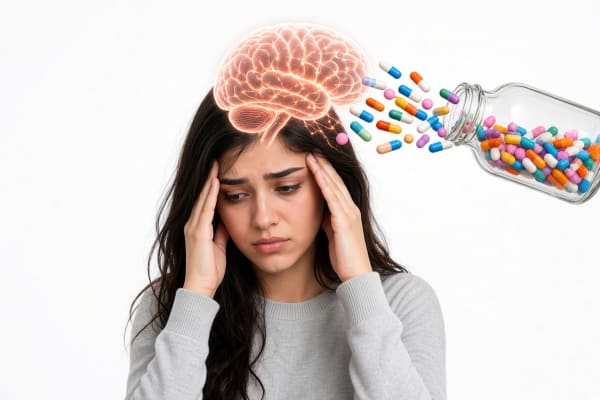
Why "Just Stop" Doesn't Work
If you or someone you love is struggling with addiction, you've probably asked: Why can't they just stop? The answer lies in neuroscience. Addiction is a chronic brain disease that physically changes how the brain functions—not a moral failing or a lack of willpower.
Understanding how addiction affects the brain replaces shame with compassion and failed attempts with effective treatment. For families across the United States, this is the starting point.
Confidential support is available nationwide. Call (833) 338-5856.
How Brain Chemistry Works
The brain communicates through chemicals called neurotransmitters. Each one carries a specific type of signal between neurons. Four are central to addiction:
- Dopamine — drives motivation, reward, and reinforcement. Central to every addictive substance.
- Serotonin — regulates mood, sleep, and appetite. Disrupted in alcohol and stimulant use.
- GABA — the brain's main calming signal. Targeted by alcohol, benzodiazepines, and sleep medications.
- Glutamate — the brain's main excitatory signal. Imbalanced in withdrawal and craving states.
Addictive substances hijack this system. They either flood the brain with dopamine directly, mimic natural neurotransmitters, or block the brain's ability to reabsorb them. The result is a chemical signal far louder and longer than anything the brain produces naturally—and the brain adapts to it.
This is why addiction and brain chemistry are inseparable. You cannot separate the behavior from the biology.
Is Addiction a Brain Disease?
The American Society of Addiction Medicine defines addiction as a chronic, relapsing disorder marked by compulsive use despite harmful consequences. It disrupts the brain's reward, motivation, memory, and control circuits.
Once addiction takes hold, the brain prioritizes substance use over survival needs like food, sleep, and relationships. This is why people continue using even when they desperately want to stop.
Genetics & Environmental Risk Factors

Addiction does not have a single cause. It emerges from the interaction of genetics and environmental risk factors—biology loaded by circumstance.
Genetic Risk
Research on twins and adopted children shows that 40–60% of addiction risk is genetic. This doesn't mean someone with a family history will develop addiction—it means their threshold for developing it is lower. Genes influence how the brain metabolizes substances, how strongly dopamine signals are felt, and how vulnerable a person is to impulse-control problems.
Environmental Risk Factors
Environment shapes whether genetic risk becomes active. The most well-established environmental factors include:
- Early exposure to substances (before age 15 significantly raises risk)
- Household substance use or addiction during childhood
- Physical, emotional, or sexual abuse
- Neglect or unstable caregiving
- Poverty and chronic financial stress
- Social isolation or peer-group pressure
- Easy access to substances
- Untreated mental health conditions
Neither genetics nor environment alone determines outcome. What matters is how many risk factors stack—and how early they appear.
Childhood Trauma & Adverse Experiences
The CDC-Kaiser Adverse Childhood Experiences (ACEs) study—one of the largest public health investigations ever conducted—found a direct, dose-dependent relationship between childhood trauma and later addiction. The higher the ACE score, the higher the risk.
The ten ACEs measured include physical, emotional, and sexual abuse; physical and emotional neglect; and household dysfunction such as parental separation, mental illness, domestic violence, incarceration, or substance use.
Adults with four or more ACEs are 7 to 10 times more likely to develop substance use disorder than those with zero. The reason is neurological, not moral: early trauma calibrates the brain's stress response system toward chronic hypervigilance, and substances become a form of self-regulation the person never learned otherwise.
This is why trauma-informed care is now a standard of practice in effective addiction treatment. Treating addiction without addressing trauma often means treating the symptom while leaving the cause intact.
How Addiction Changes the Brain: The 3-Stage Cycle
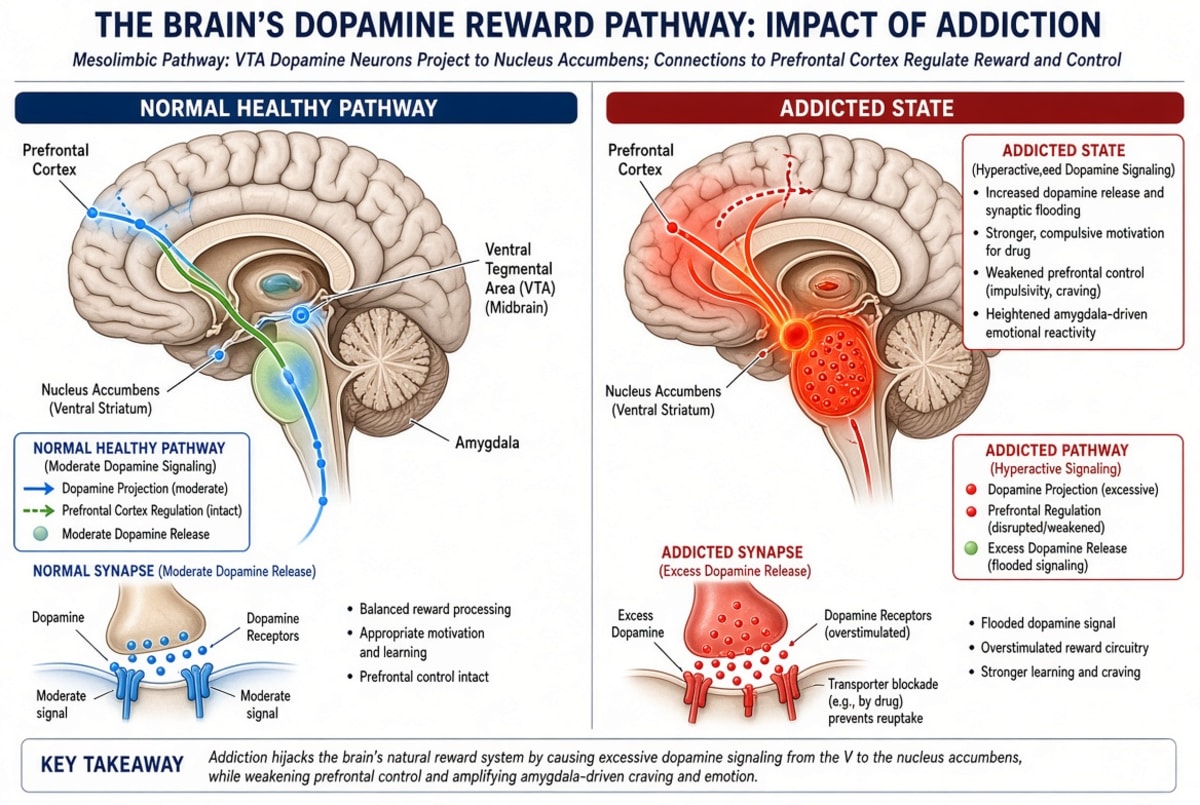
The brain's reward pathway is hijacked at every stage of addiction.
Addiction follows a predictable neurological loop that reinforces itself with each use.
Binge / Intoxication
Substances flood the reward system with dopamine—far exceeding natural rewards.
Withdrawal / Crash
Dopamine crashes. Anxiety, irritability, and cravings take over.
Preoccupation
The brain obsesses over the substance. Decision-making weakens.
Over time, the brain reduces its natural dopamine production and rewires its priorities—a process called neuroadaptation.
The Key Brain Regions Involved in Addiction
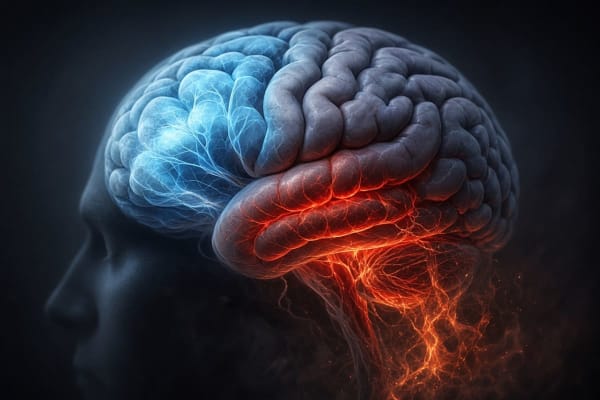
Addiction disrupts several interconnected brain regions at once.
Nucleus Accumbens
Triggers the massive dopamine release behind drug and alcohol reinforcement.
Prefrontal Cortex
Handles decision-making and impulse control. Becomes underactive in addiction.
Amygdala
Regulates emotion and stress. Becomes hyperactive during withdrawal.
Hippocampus
Links places, people, and cues to drug use—fueling relapse triggers.
These regions work as a system. When one is hijacked, the others follow. For those looking to nationwide inpatient and outpatient rehab programs, this is why medical and therapeutic support go hand-in-hand.
How Different Substances Differ
Not all addictions affect the brain identically. The specific neurotransmitter systems involved differ by substance, and this determines withdrawal severity, craving patterns, and appropriate treatment.
Heroin, Fentanyl, Painkillers
Act on opioid receptors. Produce severe physical dependence, intense withdrawal, and the highest overdose risk. MAT is highly effective.
Alcohol Use Disorder
Affects GABA and glutamate systems. Withdrawal can be life-threatening without medical supervision.
Cocaine, Methamphetamine
Target dopamine and norepinephrine. Powerful psychological dependence with intense craving and relapse risk.
Xanax, Valium, Klonopin
Prolonged use creates severe dependence and dangerous withdrawal. Tapering must be medically supervised.
Cannabis Use Disorder
Affects motivation, memory, and emotional regulation with chronic heavy use.
Multiple Substances
Requires more complex assessment and often combined pharmacological and therapeutic approaches.
Withdrawal Timeline by Substance
Withdrawal is the brain's response to the absence of a substance it has adapted to. Symptoms vary by substance and duration of use, but general timelines are well documented.
6–12 hours to 5 days
Peaks at 24–72 hours. Can include seizures and delirium tremens—medically dangerous without supervision.
8–24 hours to 7–10 days
Flu-like symptoms, intense cravings, and severe anxiety. Rarely fatal but extremely uncomfortable.
1–4 days to weeks or months
Potentially life-threatening. Tapering must be medically supervised to prevent seizures.
Hours to 1–2 weeks
Primarily psychological: depression, fatigue, and intense cravings. The "crash" phase is brutal.
1–3 days to 2–4 weeks
Irritability, sleep disruption, reduced appetite, and craving. Rarely dangerous but often underestimated.
Every timeline above assumes medical supervision when appropriate. Attempting unsupervised withdrawal from alcohol or benzodiazepines can be fatal. For those in Yonkers, NY, medically supervised alcohol withdrawal treatment yonkers ny provides the safety net that unsupervised detox cannot.
Why Adolescents Are More Vulnerable
The adolescent brain is uniquely vulnerable to addiction. Between ages 12 and 25, the brain undergoes its final major period of development—but not all regions mature at the same pace.
The limbic system (emotion, reward, sensation-seeking) matures first. The prefrontal cortex (judgment, impulse control, long-term planning) matures last—often not fully until age 25.
This mismatch means teenagers are biologically wired to seek intense experiences before they can fully weigh consequences. When substances enter the picture during this window, they can permanently alter how the brain wires itself.
- Adolescents who begin drinking before age 15 are 4 times more likely to develop alcohol dependence than those who start at 21.
- Early cannabis use is associated with lasting changes in memory and motivation.
- Nicotine exposure during adolescence raises lifelong addiction risk across all substances.
Prevention and early intervention during these years can change the entire trajectory of a life.
How Addiction and Mental Illness Activate Similar Areas in the Brain

Overlapping brain regions explain why addiction and mental illness so often co-occur.
Research shows that addiction and many mental health conditions activate similar areas in the brain—particularly the prefrontal cortex, amygdala, and reward circuitry. This overlap is why the two so often occur together.
About 45% of people with addiction also meet criteria for another mental health disorder—yet only a fraction receive treatment for both at the same time. Across the U.S., programs offering dual diagnosis treatment nationwide combine psychiatric care with addiction treatment in a coordinated plan.
Signs of Addiction in a Loved One
Addiction rarely announces itself. Watch for these behavioral, physical, and emotional signs:
- Cravings that feel physical
- Using more than intended
- Withdrawal from family and friends
- Sudden changes in mood or energy
- Financial problems or secretive spending
- Neglecting work or school
- Sleep disruption or appetite changes
- Wanting to stop but can't
- Legal or relationship trouble
- Defensiveness when confronted
- Needing more to feel the same effect
- Hiding use or lying about it
Recognizing these early signs can prevent years of suffering. If you're searching for an addiction treatment center nationwide, our team can help you take the next step.
Types of Addiction
Addiction is not limited to illicit drugs. Any substance or behavior that produces compulsive use despite harm can be clinically significant. The most common presentations include opioid, alcohol, stimulant, prescription sedative, and cannabis use disorders. Behavioral addictions—such as gambling—share many of the same neural mechanisms, though they are classified separately.
The specific substance matters less than the pattern: compulsion, loss of control, and continued use despite consequences.
Inpatient vs. Outpatient Rehab: Which Is Right for You?
Choosing the correct level of care is one of the most important decisions in early recovery. Both inpatient and outpatient programs work—but for different situations.
Residential Treatment
24/7 care in a structured environment. Best for severe addiction, medical detox needs, or unsafe home environments.
IOP & PHP
Scheduled treatment while living at home. Best for mild-to-moderate addiction, work or family obligations, and aftercare.
Not sure which level of care fits your situation? Our nationwide team can help you decide.
Call (833) 338-5856Evidence-Based Treatments
The most effective treatment programs combine several approaches. No single intervention works for everyone, and research consistently shows that combining medication (when appropriate), therapy, and social support produces the best outcomes.
Cognitive Behavioral Therapy (CBT)
CBT helps individuals identify and change the thought patterns and behaviors that drive substance use. It is one of the most extensively studied treatments in addiction medicine.
Dialectical Behavior Therapy (DBT)
Developed for borderline personality disorder but widely adapted, DBT teaches emotional regulation, distress tolerance, and interpersonal effectiveness.
Trauma-Informed Therapy
A significant portion of people with addiction have histories of trauma. Trauma-informed approaches avoid re-traumatization and address underlying experiences that often drive substance use.
Family Therapy
Addiction affects entire families. Family therapy rebuilds communication, establishes healthy boundaries, and involves loved ones in recovery in constructive ways.
Contingency Management
This behavioral approach provides tangible incentives for verified abstinence. It has strong evidence for stimulant use disorders, where medication options are limited.
Peer Support & Mutual Aid
Programs such as AA, NA, SMART Recovery, and Celebrate Recovery provide ongoing community support. Research shows participation is associated with improved long-term outcomes.
For those seeking professional addiction treatment that combines these approaches, integrated programs typically produce better outcomes than single-modality care.
Understanding MAT Medications
Medication-Assisted Treatment (MAT) uses FDA-approved medications to reduce cravings, prevent relapse, and stabilize brain chemistry while a person does the therapeutic work of recovery. MAT is not "replacing one addiction with another"—it is evidence-based medicine for a chronic brain disease.
Buprenorphine (Suboxone)
Reduces cravings and blocks opioid effects. Can be prescribed in office settings and taken at home.
Methadone
Long-acting opioid that eliminates withdrawal and cravings. Dispensed through specialized clinics.
Naltrexone (Vivitrol)
Blocks opioid receptors and reduces alcohol cravings. Available as a daily pill or monthly injection.
Acamprosate & Disulfiram
Acamprosate reduces cravings; disulfiram creates an unpleasant reaction to alcohol.
MAT medications save lives. Studies show they reduce overdose deaths by 50% or more and dramatically improve retention in treatment.
Harm Reduction Explained
Harm reduction refers to policies and practices that aim to reduce the negative consequences of substance use without requiring abstinence as a precondition for help. It is not a philosophy that encourages use—it is a pragmatic recognition that some people are not ready or able to stop, and that keeping them alive long enough to reach that point is worthwhile.
Common harm reduction strategies include:
- Naloxone distribution for opioid overdose reversal
- Fentanyl test strips to detect contamination
- Needle exchange programs to prevent disease transmission
- Safe consumption spaces in some jurisdictions
- Non-judgmental education about safer use
Harm reduction does not replace treatment—it complements it. Someone kept alive through an overdose has a future. Someone lost to one does not.
Can the Brain Heal from Addiction?
Neuroplasticity allows the brain to rebuild circuits damaged by addiction.
Yes. The brain can heal through neuroplasticity—its ability to reorganize by forming new neural connections. The same plasticity that allowed addiction to take hold also allows recovery to take root.
Different substances cause different patterns of damage and different rates of recovery. Opioid receptors recover relatively quickly. Dopamine transporters can take months. Prefrontal function may take a year or more to fully restore. But the direction of change is consistent: with sustained abstinence and treatment, the brain repairs itself.
Nutrition, Sleep & Exercise in Recovery
Recovery is not just psychological. The brain is a physical organ, and it heals faster when the body supports it.
Nutrition
Chronic substance use depletes key nutrients: B vitamins, magnesium, zinc, omega-3 fatty acids, and amino acids that serve as neurotransmitter precursors. Restoring these supports mood, energy, and cognitive function. Protein-rich meals, leafy greens, and healthy fats are especially helpful in early recovery.
Sleep
Sleep disruption is nearly universal in early recovery and one of the strongest predictors of relapse. The brain consolidates memories and clears metabolic waste during sleep—critical processes for neural repair. Establishing consistent sleep hygiene (fixed wake time, no screens before bed, cool dark room) matters more than most people realize.
Exercise
Aerobic exercise raises natural dopamine and endorphins, reduces cravings, improves mood, and rebuilds prefrontal function. Even 20–30 minutes of walking daily has measurable effects. Exercise is not a metaphor for recovery—it is a mechanism of it.
Post-Acute Withdrawal Syndrome (PAWS)
Post-Acute Withdrawal Syndrome (PAWS) is a set of symptoms that can persist for weeks or months after acute withdrawal ends. It is one of the most misunderstood aspects of recovery—and one of the most common reasons for relapse.
Symptoms of PAWS include:
- Mood swings and emotional instability
- Anhedonia (inability to feel pleasure)
- Sleep disturbances
- Cognitive fog and memory problems
- Fatigue and low motivation
- Anxiety and irritability
- Cravings that come in waves
PAWS is not a sign that recovery has failed. It is a sign that the brain is still healing. Knowing about PAWS in advance can prevent the despair that comes from thinking "I should feel better by now." Many relapses happen because PAWS symptoms feel permanent when they are not.
Recovery Timeline
Detox & Stabilization
Dopamine begins rebalancing. Sleep and mood stabilize with medical support.
Receptor Recovery
Dopamine receptors rebuild. Cravings become more manageable. PAWS often emerges here.
Executive Function Returns
Prefrontal cortex reactivates. Focus, planning, and impulse control improve.
Emotional Regulation
Amygdala reactivity declines. Emotional responses become more proportionate.
Long-Term Consolidation
Recovery becomes less about fighting cravings and more about building a life.
Typical treatment timelines:
- Medical detox: 3–10 days
- Residential / inpatient rehab: 30–90 days
- Partial hospitalization (PHP): 4–6 weeks
- Intensive outpatient (IOP): 8–12 weeks
- Continuing care & alumni: 6–12+ months
Relapse Prevention Strategies
Relapse is common—between 40% and 60% of people in recovery experience at least one. It is not a sign that treatment failed. It is a sign the plan needs adjustment. Effective relapse prevention strategies include:
- Identifying triggers. People, places, emotions, and situations that raise craving intensity.
- Building a support network. Sober friends, sponsors, and peer groups.
- Practicing coping skills. Rehearsing responses to high-risk situations in advance.
- Managing HALT states. Hunger, Anger, Loneliness, and Tiredness are common relapse precursors.
- Continuing therapy. Even after acute treatment ends.
- Recognizing warning signs. Isolation, dishonesty, skipping meetings, romanticizing use.
Programs that include structured relapse prevention planning consistently outperform those that stop at detox.
How to Help an Addict Who Doesn't Want Help
Watching someone you love struggle with addiction is agonizing. You can't force recovery—but you can create the conditions that make it more likely.
- Stop enabling. Do not provide money, housing, or cover-ups for substance use.
- Set boundaries with compassion. "I love you, and I will not participate in this anymore."
- Involve a professional interventionist. Structured interventions are far more effective than confrontations.
- Get support for yourself. Al-Anon, Nar-Anon, and family therapy are essential.
- Have treatment options ready. When the person is ready, you must be too.
If you're exploring inpatient and outpatient care across the U.S., a professional assessment can clarify what kind of support fits your situation.
Codependency & Family Dynamics
Codependency describes a pattern in which family members organize their lives around the addicted person's behavior—often unconsciously. It is not a character flaw. It is a survival response to chaos.
Common codependent patterns include:
- Making excuses for the person's behavior to others
- Taking on responsibilities the person should handle
- Feeling responsible for the person's choices
- Neglecting one's own health, work, or relationships
- Believing "if I just try harder, they'll stop"
Codependency prolongs addiction because it removes consequences. The person never hits the bottom that would motivate change—because someone is always there to soften the fall. Family therapy and support groups help break these patterns in ways that benefit both the addicted person and the family.
Staging an Intervention
An intervention is a structured, pre-planned conversation designed to help someone recognize the severity of their addiction and accept treatment. When done well—ideally with a trained professional—it can be the turning point.
Key principles of an effective intervention:
- Prepare in advance. Rehearse, plan what each person will say, and anticipate reactions.
- Stay specific and factual. Focus on observed behaviors and their consequences—not accusations.
- Avoid anger and blame. The tone should be love and concern, not judgment.
- Present clear consequences and clear options. What happens if they refuse treatment must be stated honestly.
- Have a plan ready. Beds available, transportation arranged, insurance verified.
- Hold the line. If the person refuses, the consequences stated must be followed through.
An intervention is not a guarantee—but it dramatically raises the odds that a person enters treatment before their addiction progresses further.
Insurance, Cost, and What to Expect
Under the Mental Health Parity and Addiction Equity Act, most health insurance plans in the United States are required to cover addiction treatment at levels comparable to medical and surgical care.
Cost varies widely depending on the level of care, length of stay, and specific insurance benefits. Most reputable treatment centers offer free insurance verification and can provide a clear estimate of out-of-pocket costs before treatment begins.
Finding Treatment Nationwide
SAMHSA operates a free, 24/7 National Helpline at 1-800-662-4357 for substance use information and referrals in all 50 states. Many regions also maintain their own dedicated treatment networks that coordinate care locally—for example, residents of Yonkers, NY can access alcohol withdrawal treatment yonkers ny through Hudson Valley Rehab, which connects individuals with medically supervised detox and rehab services throughout Westchester County.
If you're considering treatment for yourself or someone you love, the most important first step is a professional assessment. Crossroads Agency offers nationwide addiction treatment programs and can be reached at (833) 338-5856.
The SAMHSA National Helpline is available 24/7 at 1-800-662-4357. For nationwide treatment questions, Crossroads Agency can be reached at (833) 338-5856.
The Role of Stigma
Stigma is one of the biggest barriers to recovery. When addiction is framed as a moral failing rather than a medical condition, people hide their struggle, delay treatment, and internalize shame that makes recovery harder.
Research consistently shows that stigma:
- Reduces the likelihood that someone will seek help
- Worsens mental health outcomes
- Damages family relationships
- Limits employment and housing opportunities for people in recovery
Changing how we talk about addiction changes how people experience it. Language matters: "person with substance use disorder" instead of "addict," "died of an overdose" instead of "overdosed," "in recovery" instead of "clean."
Understanding the neuroscience of addiction is one of the most effective ways to reduce stigma—because it replaces judgment with explanation.
Frequently Asked Questions
How does addiction affect the brain?
It changes the brain's reward, stress, and decision-making circuits—reducing natural dopamine, weakening the prefrontal cortex, and strengthening habit pathways.
Is addiction a brain disease?
Yes. The AMA and NIDA classify addiction as a chronic brain disease involving long-term changes in reward, motivation, memory, and control circuits.
What part of the brain does addiction affect?
The nucleus accumbens, ventral tegmental area, prefrontal cortex, amygdala, and hippocampus.
Can the brain recover from addiction?
Yes. Neuroplasticity allows the brain to heal over time with abstinence and treatment. Recovery takes months to years, but improvement is possible.
How long does rehab take?
Detox takes 3–10 days; residential rehab 30–90 days; ongoing outpatient care often continues for 6–12 months.
Does insurance cover addiction treatment?
Most U.S. plans cover addiction treatment under the Mental Health Parity and Addiction Equity Act. Free verification is available at (833) 338-5856.
What is dual diagnosis treatment?
Simultaneous treatment of addiction and co-occurring mental health disorders such as depression, anxiety, or PTSD.
How do I help someone who doesn't want treatment?
Stop enabling, set compassionate boundaries, involve a professional interventionist, and have treatment options ready. Call (833) 338-5856.
Is relapse part of recovery?
Relapse is common—40–60% of people experience at least one. It is not a sign that treatment failed. It usually signals the treatment plan needs adjustment.
What's the difference between physical dependence and addiction?
Physical dependence means the body has adapted to a substance and will experience withdrawal without it. Addiction involves compulsive use despite harm and loss of control.
What is Post-Acute Withdrawal Syndrome (PAWS)?
A set of symptoms—mood swings, sleep problems, cognitive fog, cravings—that persist for weeks or months after acute withdrawal ends. It is a normal part of brain healing.
How long does alcohol withdrawal last?
Alcohol withdrawal typically begins 6–12 hours after the last drink, peaks at 24–72 hours, and lasts up to 5 days. Severe cases can be life-threatening without medical supervision.
How long does opioid withdrawal last?
Opioid withdrawal begins 8–24 hours after last use and peaks in 2–3 days. Acute symptoms usually subside within 7–10 days, though PAWS can persist longer.
Is addiction genetic?
Genetics accounts for roughly 40–60% of addiction risk. Environment and life experience account for the rest. Neither alone determines outcome.
What are ACEs and how do they relate to addiction?
Adverse Childhood Experiences are potentially traumatic events in childhood. Adults with 4+ ACEs are 7–10 times more likely to develop substance use disorder.
What is harm reduction?
Harm reduction refers to practices that reduce the negative consequences of substance use—like naloxone distribution and fentanyl test strips—without requiring abstinence as a precondition for help.
What is codependency?
A pattern in which family members organize their lives around an addicted person's behavior, often unconsciously removing consequences that would motivate change.
How do I stage an intervention?
Prepare in advance, stay factual and loving, present clear options and consequences, and have treatment logistics arranged. A trained interventionist can significantly improve outcomes.
What is MAT and is it safe?
Medication-Assisted Treatment uses FDA-approved medications—buprenorphine, methadone, naltrexone—to reduce cravings and prevent relapse. It is evidence-based and reduces overdose deaths by 50% or more.
Why are adolescents more vulnerable to addiction?
The prefrontal cortex—responsible for impulse control—is the last brain region to mature, often not fully until age 25. Adolescents are biologically wired to seek intense experiences before they can fully weigh consequences.
Addiction changes the brain. Recovery changes it back.
Free, confidential consultation for U.S. residents. No obligation.